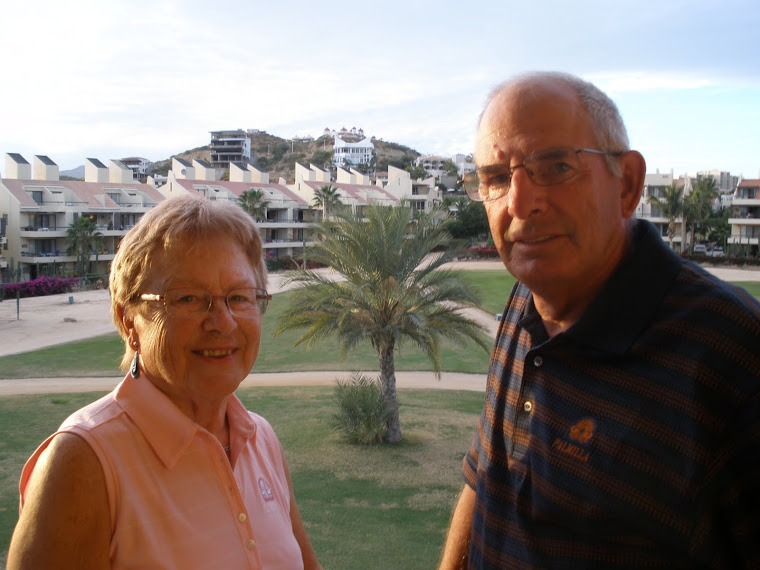
Peter and Marilyn

Peter and Marilyn
Christmas in San Jose del Cabo

Saturday, October 23, 2010

On to Argentina

Photos: I am trying to keep warm!


The train ride from Hell.

Thousands of pink flamingos on the salt flats. Merry-go-round turned

by man-power. Plus, the many-sided slide in the same park in La Quiaca.


One of more than a dozen wagens of something being transported quicklt by wagon.
Protest to do with the need for education - it is not free in Argentina.


Tuesday & Wednesday, Oct. 19 & 20.

We get a taxi to the bus terminal in lots of time. Nobody is working at the kiosk for Fletcha bus, supposedly the best. Finally, a light is on but still nobody is home. A young man frantically gets a hold of Peter and says that our bus has been changed and we must come pronto to the other bus. For the inconvenience, they will provide the taxi from the bus depot in Oruro to the train. (Our other bus was to take us directly to the train.) There is a young lady we have met, Tash from Brisbane, and another couple on the bus before any “locals” are loaded. Not long before departure time, a German couple come on the bus, feeling very confused and “ripped-off” as they were approached in a panic by the same guy who got us and whisked to our bus, thinking all along that it was a scam! They felt a little better when they saw other foreigners on the bus.
We begin only 10 minutes late, but proceed to lose time as the stop in El Alto becomes the place of choice to get off and get some food. One local decides at the last minute that she is hungry (although I think if she didn’t eat for a month, the reduction of weight would not show!), and she casually goes to a stand and orders something. The bus driver inches forward until he is just past her and then stops and waits. We are now over an hour and not yet out of La Paz. As we pass the spot we saw the body on the way in and hit the autopisto, an Evangelical preacher begins his spiel. You don’t need any Spanish to recognize the patter. Finally, he passes the hat and explains that he has a website. As if by providence, the bus begins to sputter. Finally, we are parked at the side of the road and the locals are up in arms yelling at “el maestro” - their word for the driver. The bad news is we have run out of diesel the good news is we are only 50 yards from the station! They get a can of fluid to get us to the pump. By the time we leave it is almost 2 hours and we are maybe a half hour out of La Paz. Luckily, we have three hours before our supposed arrival time and the departure of the train.
The train station in Oruro is exceptionally clean. We buy a few snacks for a late lunch and for on the train. They begin boarding early. Our seats are fine, if somewhat thread-bare. They show movies as we travel. Our dinner is small, but adequate - chicken, fries, frozen vegetables, and canned gravy. It is accompanied by a warm coke.
I lowered my seat at about ten o’clock, snuggling under the warm cover. But, the track is so rough that at times when you go over a series of undulations, one feels it that the train is going to become air-bound. Otherwise, it sways enough to cause anyone so inclined to become sea sick. Yet, we get to Vilazon in one piece, if not a little tired.
The crossing of the border was long, but uneventful. The walk from the train to the frontier is farther than it appears on the Internet. A taxi might have been a good idea, especially since Peter is still under the weather.
We do take a taxi from the Argentina border to our hostel. It is a little tired, but it is clean and in the centre of the downtown not far from the bus stop. We take the room that is ready, and within an hour we are fast asleep until early afternoon.
We go out to use the Internet and to have dinner, only to discover that in Argentina, you eat before three a la tarde, or after eight at night! The supermarket became our source of dinner. I have discovered that strawberry yogurt is just as good as peach.
The town is very clean and quiet, much to our liking. We are in bed early and make up for some of the lost sleep over the past few days. The bus is not until 2:30 the next day, so no morning hurry.

La Paz


Photos:
Wiring in the street! Can you make sense of it, Lorne?;

Typical stall in the Witches' Market;

Llama fetus (for good luck) in the Witches' Market;

Downtown.

View from the Mirador we walked to.

Monday, Oct. 18.

Before starting our day, we drop our laundry at the front desk. It will be ready tonight, by 10. It turns out to be very well done, nice white whites, neatly folded, but cost way more than we were expecting. I’m happy because it is done!
We walk uphill to get our tickets, and the lady there suggests we walk to where we are going to get the city tour bus. She says it is almost all flat on the way. She also suggests that if we have time, we should go to the mirador as it is a nice park and an excellent view of the city.
We go downhill to the hotel, then our walk takes us about fifty minutes as at this high-altitude strolling is a fast pace. We walk by the University building which is a high-rise with a plaza in front. We find a corkscrew to replace the one we broke a couple of days ago. It is amazing how small finds in a big city can be so satisfying! We make the turn to the mirador (lookout for those who don’t get the joke), yes, it is more uphill. It makes Park Hill look flat! and it goes about twice as high. The park is lovely with large shade trees and a lovely view. There is a small chapel here which is probably built over an original indigenous peoples’ worship site, as most of the Spanish Catholic churches are so placed.
After a little rest, it is downhill again, this time one must take care not to slip and fall as the grade is so steep.
We arrive for our bus about an hour early and have one of the best times just sitting and watching the world rush by. We entered The Ritz hotel - serious 5 star - to ask about our tour bus stop and are hustled out as the handsome young bell hop if full regalia shows us where it is.
We walk to the opposite side of the traffic circle, dodging traffic to get across two streets, and find a wooden bench meant as a waiting place. In front of us is the moving stop of the thousands of mini-busses that serve as a major form of transportation. The destinations of each bus is painted on the windshield and is often accompanied by someone yelling the destinations in the hope of attracting passengers. As they pull in towards the side of the road (sometimes just stopping in traffic) a passenger or two appear to fall out of the vehicle almost simultaneously as the others jam themselves inside. Every strata of society appears to use these vans. We are absolutely fascinated.
Finally the bus arrives, and although we are glad we took the trip as it takes us to one of the highest miradores in town, it confirms our belief that La Paz is a city that is falling apart from lack of repairs. I took a picture of the wiring system, so I hope it will download well so you will get a feeling for the place. Yes, many of the buildings are old, but many are only one hundred years old and some, like the skyscrapers are quite new, yet all appear to be falling apart. It makes the downtown Eastside of Vancouver look normal.
For dinner, the hotel has recommended Luna & Sol. It is only two blocks uphill. We look in and realize that we are forty years older than the eldest person there. Peter wants to check out a hostel on the next uphill street, so we mount the stairs and take a look. We decide to return to the restaurant for dinner and are not disappointed. I have a nice, spicy roti and Peter has a fillet, we share a bottle of water, and each have a large glass of wine. All this for the equivalent of $30 Canadian.
If you are getting tired of the ups and downs, so are we! Also, Peter is definitely getting the flu or something. He is lacking appetite, and having some problems getting enough air. I think it is a bit of altitude sickness without the headache. I am looking forward to finally feeling warm as we move from the mountains and la pampa.
Tomorrow we begin a twenty-four hour trip by bus and train to the first hole-in-the-wall place (if you don‘t count Copacabana) - La Quiaca, Argentina.

La Paz, Bolivia


Photos: Orchestra playing at Belles Artes; Cathy, remember the braids?; Cathedral at main square; The young ladies who are not from El Alto; Dancing ladies.


Sunday, Oct. 17

A last word on Copacabana: It is extremely small with few cars and few barred windows and doors. There was an extremely thin lady we saw several times, each time on the road outside a place that sold CDs, which of course they were playing. This lady was spinning and dancing in her own little world. The locals paid absolutely no attention to her as this is what she did.

Our first morning in La Paz, I awake to church bells. Our hotel is at the side of Iglesia San Francisco. We walk uphill to the travel agent who is closed, but get some meds from the farmacia de lado to help with our runny noses. We go downhill to the hotel, then uphill in the other direction to find the main square. On the way we hear the music of many ten-string guitars. At the Belles Artes they are having a free concert of an orchestra. The participants are mostly dark-skinned and of all ages. We stay awhile, but Pete’s attention span is stretched, so we move on to the square. This is the site of the Governor’s Palace, the City Hall, and, of course, another church. A marching type band has just finished performing, obviously by the instruments and uniforms, they are not from El Alto! A high school band begins to perform. There are adults (teachers?) also participating. One lady is really good on the saxophone. There is a dance group preparing to perform next and I hope to see them, but a huge black cloud is closing-in, so we leave just before the band has finished. During one of their numbers, some older, well-dressed ladies waltz into the open space and performed an impromptu formal dance with white handkerchiefs waving gracefully over their heads. The audience applauds enthusiastically when they finish.
Before we reach our hotel - downhill - it begins to rain fairly heavily. We stop at our room for Peter to get a jacket, and then again walk uphill to the travel agent. It is obvious by now that she does not work on Sundays! Peter later sends her an e-mail which is promptly answered that she has our bus and train tickets ready for us to pick-up on Monday after 10.
Earlier this morning, I had a neat experience. While Peter was using the bank machine, I took out my camera to take a photo of the skyscraper across the street. At the same time two short gentlemen were also taking a picture. When they noticed me, they asked me, in Spanish of course, where I was from. I answered and asked them also. It turned out they were tourists from a town north of Lima, Peru. They told me that their town and the area is very beautiful. When Peter emerged from the caja, he was surprised as he was greeted by two little guys shaking his hand and smiling in greeting!

Monday, October 18, 2010

La Paz


Saturday, Oct. 15.

Those of you who are following will realize that the picutre from yesterdays’ post actually belong with today’s. Not to worry, because I had too many to download at once for today. I hope today’s will be: the snow-capped mountains (for skiers) north on La Paz; Our first view of the city; the city in the bowl, La Paz; finally for Trevor, Spike enjoying his ride in my backpack to so many interesting places;

It is a real treat to have an early afternoon bus, 1:30, so we sleep in and have a little breakfast. Our check-out is 10:30, so Peter settles the bill and we sit in the atrium for the two hours before we leave. I begin to knit socks and Peter enjoys his Kindle. Although there is a free ride down at 1, we bump our way downhill at 12:45 and are the first in line. I stake-out our place and Peter takes care of the luggage. There is no bus depot in Copacabana - it is one of the main streets in town! There have to be fifteen buses of all sizes and shapes. The couple we call “the poutty girl” couple from our hotel & trip yesterday, are second in line and it is obvious he thinks that they are first! I managed to hold my position. Trevor would be proud of how his old Baba managed this in pleasant, but firm way. We got the first seat which looked out the front window and had lots of leg room. Peter figures the bus will go around the boulevard we are parked on to get out of town. No, he goes up a different street and is blocked by the buses and vans parked outside the Basilica. It is Saturday - wedding day! \Now he driver skilfully and backs down the same, narrow road, pedestrians almost under the wheels. When we finally make it to the bottom, he goes the way Peter figures he should have in the beginning. Oh well, we are a little late in leaving.
On the trip to La Paz you go over two substantial passes. The topography at one point was like going from Rock Creek to Osooyos. We saw a group of bikers on the uphill and thought of how their lungs must be burning enduring both the incline and the air at 4000 metres. You also go over a short stretch of water. Everyone gets out and pays a small fee for a ride across in a dilapidated motor boat, while the bus goes by barge with a minibus or car sharing the space. It is quick and efficiently done. It is also a bathroom or smoke break for those who need it. We are still driving around Lake Titicaca. You get an appreciation for its size on this bus trip.
The land on this side of the crossing appears easier to work as it is in the flat plains of the lake. We pass one town that looks like it is a sport fishing area for the rich of La Paz. The highway, as we near the city becomes quite smooth. Finally, we reach the outskirts which are Alto to the city. People are hustling across in front of the bus. This is the only time our driver used his horn except once when a dog looked like it was going to cross. At one point we notice a crowd of people at one side of the road. As we approach, two ladies run across the road and there is a man (corpse?) being lifted into the back of a van-type taxi. Obviously, he had been hit and was being transported to the hospital. Further on, the road widened into a two?three?-lane boulevard. This went through a city much like the ones we saw in Mexico. Suddenly, we got a view of the city Abajo! It is one of the most extraordinary sights I have ever seen. It is like a big bowl - almost like the inside of an immense volcano with large, modern buildings at the bottom and houses all the way up the sides. You are now on a highway which coils down like the upper level from Horseshoe Bay to the Second Narrows bridge. Part of the way down we take the off ramp onto a highway that is gridlocked. It certainly pays to be the biggest, as the bus got through in less than five minutes. He had to back-off and let a van go so he would have room to squeeze on. This highway is just like in Quebec where the on ramp is before the off ramp so most of the traffic is crossing over! We travel down a little farther and leave the highway to enter the main bus depot. Of course, there is no carrel for us, so the driver just keeps going and parks parallel to the building. Luckily, my luggage is the first to fall out when the driver opens the bottom. Peter’s was right under mine, so we are off quickly. The official taxis are allowed to enter the bus-parking area, and we have one of the first. Then begins the fifteen-minute hair-raising ride to the hostel/hotel. The ride was about $7.00. The tiny bell-hop picks up both our bags and carries them up the flight of stairs to the front desk. After check-in, he carries them, plus Peter’s daypack down the back flight of stairs to our room. Again, there is a bright atrium and our room is tidy and clean. Now a little down-time in La Paz. Spike has been our “good luck” companion and conversation starter snugly settled in my pack. We plan a Hop On/Hop Off city tour on Monday, otherwise, just walk and explore. I’ll post again once we are out of La Paz.

Copacabana to La Paz


Friday, Oct. 15

Sorry about the sideways picture. And the double the posting before. I’m still learning.
This time I will try to post one picture from the Isle del Sol, the buses in the street when we were leaving Copacabana, (the burrow was in the last posting), and the bus backing up after taking the wrong turn.

We took a trip to the Isle del Sol. The guide to the ruins, Faustico, made reference to the pre-Inca society all along the way. The people living on the island who tend the land do so in the old way. Most speak only the Aymara language. We saw an elderly lady toiling the garden using a pole with a long blade crudely tied to the bottom. The ruins at the top we pre-Inca. You can understand the difference by the crudeness of the construction. What is really interesting is that at one time he entire island was underwater, but, also, that between sections of the island Jacque Cousteau went underwater and discovered a ruin which would have been constructed when this area was above water, of course. The artefacts are in a museum in La Paz. I think Peter is ruins/museumed-out for the moment, so I doubt we will see them. We walked about 50 minutes to the top. For his 1 ½ hour guide trip Faustico charged each of us the equivalent of $1.40. Some of the group began a three-hour hike to our second port-of-call, and they were sent off with “buena suerte”s in many languages. All but one of this group were twenty-years younger than our kids! Some burrows met us on the way down and it was obvious by their behaviour that they are used to getting treats from the visitors. As the guide okayed it, we gave them some crackers in exchange for a photo. At one point I was talking with the guide, practicing my Spanish, and was not paying enough attention to the rocky path and I went down on my right knee. I have had a little owie (sic) since. It didn’t bruise so nothing is broken. I was more silent the rest of the way down, probably to the guide’s delight!
We met a nice young British couple on the trip down. He had thanked me for translating some of the stuff for them. He is a teacher who has a new job starting in a few months and she has just completed a masters in some area of political science. We stopped for a beer while we awaiting our boat. We make two more stops to view ruins. We arrive, tired, back at Copacabana at 5:30. We still need to hike from the wharf to the hotel.
Before going for dinner, we check about reserving seats to La Paz the next day. It turns out the bus is “asiento libro” - right “first come first served”. We plan to be first!
We walk around the market area again, then go out for pizza. My tummy manages the wonderful hot chocolate (Chunks of real chocolate are put in a cup and hot milk added. Then you stir vigorously to melt the chocolate. They give you sugar, but I have never needed it.) but I can only manage one small slice of pizza. Luckily it is cheese only, so I take home for the bus tomorrow.

Copacabana


Thursday, Oct. 14


Oh, the buns and the freshly-squeezed fruit juices. The buns have crispy crusts and melt-in-your-mouth sour dough centres. I will miss both.
Our tour bus to Lake Titicaca is one of those two-door jobbies you see from the cruise ships in Cabo. We must visit the police station and the Immigration office on our way out of Peru, walk across the border, and visit the Immigration off ice in Bolivia. The fellow there thought I had an Australian passport and said, “kangaroos?”, I said, “ no, snow, canadiense!” We both had a good laugh. We are herded into small van buses for the last few minutes into Copacabana. On the map we have, it is only three blocks to our hostel. What it doesn’t show is that it al all uphill on cobble streets. At this altitude, we took the odd break as we hauled our luggage uphill. I had my two Eagle Creek pieces zipped together and at the first pause, I securely tied my Peruvian carry bag onto the handle. That made the going much easier.
This hotel/hostel is a little more rustic, but we have a view of the lake and it has a wonderful atrium with three groupings of comfortable chesterfields and coffee tables. Felipe and his wife who run the place are always busy with some chore. Felipe even clears tables at breakfast when it get busy. We walk down to the waterfront that has a beautiful beach but it is way too cold for swimming. After a light lunch we return to the hotel and crash for a couple of hours. The town is very small and built into the hill. There are virtually no private cars and only a few taxis. You simply walk up and down the centre off all the streets. One of the first things I noticed is the lack of bars on the doors and windows! That night, as the shops closed, one shop by the market had a few big items still outside and only a card-type table on its side instead of a door. What a concept. We were told by one of the guides that the pre-Spanish and still rural philosophy is: Don’t lie; Don’t be idle; and Don’t steal. We would all live a more contented life if this was everyone’s behaviour. Instead of doors, a stick diagonally across the doorway means nobody is home so don’t enter. We actually saw this a few times during the day in shops in Copacabana.

Puno


Wednesday, Oct. 15