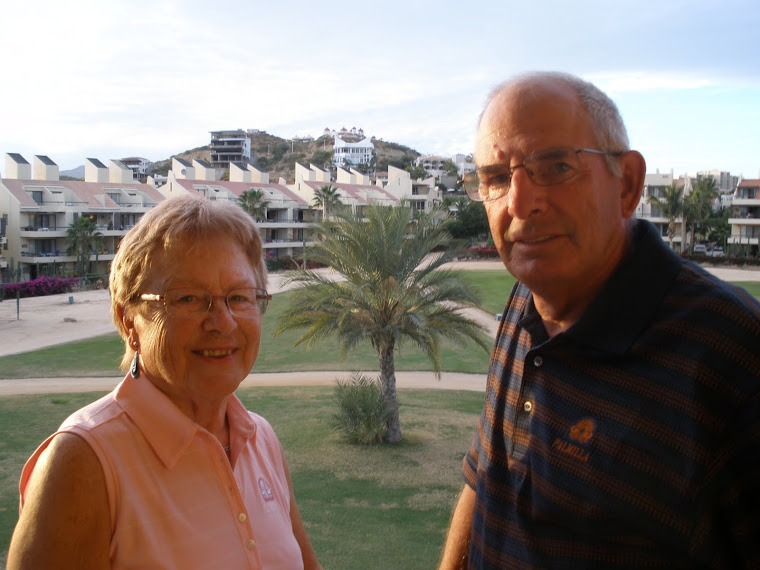
Peter and Marilyn

Peter and Marilyn
Christmas in San Jose del Cabo

Tuesday, February 22, 2011

Leaving Siem Reap and Experiencing Ho Chi Minh city

Wednesday, Feb. 16
After saying our goodbyes to the wonderful staff at Tara Angkor, we climb aboard tuk tuk # 10 and get our last glimpses and scents of Siem Reap both feeling a little sadness as the past three days have been magical.
As usual, we are at the airport too early, not only for our check-in but for the check-in of the Vietnam Air flight before ours. While we are waiting, fate would have it that another Canadian couple move in to share the bench upon which we are seated. Peter notices the tell-tale iron (usually stainless-steel) ring on the pinkie of the man. They begin to talk. I am on the other side of Peter and am busy sewing my hat. They keep jabbering and jabbering. Finally, I figure I should get up and at least say hello to the wife who has been totally ignored by the two guys. What a bit of luck. It turns our that our two engineer-husband are twins in personality. Angela, it turns out, is a sculptor. While her husband has retired, she has returned from England where she was able to sculpt professionally, and has worked herself back into an active profession in Ottawa. Now their travel time is limited by her need to fulfill commission obligations. I tell her about the Castlegar project and promise to sent her the information. She says that it sounds like fun and would be something she might like to participate in. I get her information - the guys are still talking! Angela says that Mike usually talks to nobody. They are even more alike than we figured.
In the one-hour flight to Ho Chi Minh city (Sai Gon), they manage to serve us a light snack. That’s good because I don’t see food again until 7 p.m.
The trip to the hotel is quick and uneventful, we just note the number of scooter and motorcycles as apposed to cars. It is obviously to mode of transportation (as was minibuses in South America) in this area.
The hotel is spotless - not as luxurious as Siem Reap, but very nice.
Once we are settled, we get a map at the front desk and venture out into the city. The main central market is at the end of our street. It is all hustle and bustle, that is if you are fortunate enough to make it across the street! (Crossing the street instructions follow.) The sales people here are fairly aggressive with a habit of touching you which can be a little off-putting to a Canadian. There is lots of stuff, but I really don’t want to buy anything. As we begin to walk back to the hotel I see my first rat scurrying from the market to the gutter. It wasn’t big and didn’t go for my feet like the roach did in Ayers Rock resort.

Leaving Siem Reap in the tuk tuk.

More motorbikes than cars or buses.
Instructions on how to cross the road in next post.


We continue to the hotel and, for one of the few times, I am dead tired. I slept for about 1 ½ hours last night and woke-up wide awake. I decided to get up and complete writing my blog, so had only another 2 hours of sleep.
We do change and go down to the restaurant for dinner just before 6:30. We can seeThe lady guide starts ordering the waitresses about. At ten to seven, we still do not have our dinner and the group is not only getting drinks, but food is being served at their table. It is not often that I will leave a restaurant, but I decide if one more plate comes to their table before I get my dinner, I am simply going to walk out. Peter is beginning to seethe. He gets up and speaks to the waitress who runs into the kitchen, shouting as she goes. My tofu appears. Still no rice or Peter’s ribs. The girl makes two more vocal entries into the kitchen and by ten after seven we have our meal. a big group is coming, as there are 22 seats at a long table. Thank goodness we are seated. We place our order and get our drinks when the group arrive.
Once we finish eating, I get up while Peter pays the bill and go to complain at the front desk. The waitress is there with the guide and the receptionist. The guide leaves and I can see how upset the waitress is. I tell the receptionist how hard the waitress tried to get our meals and how she was ignored and that I thought it was a bad reflection on the hotel as we had received excellent service in Siem Reap and now our first experience in Vietnam is so unacceptable. By this time Peter has joined us and says that the simple solution is that we will not be eating in the restaurant again. All we get were apologies, but this really is an unfortunate way to begin our stay here. It can only get better!


A couple of projects for Lorne to figure out . Actually, we think the lower lines are for telecommunications. Anyone for cell-phones?


There is poultry as well as rats in the city. Dinner?


Friday, February 18, 2011

The final temple

Tuesday Afternoon, Feb. 15
Once back on dry land, Lem walks us down the main street of town. Actually, it is a dirt pathway lined by stalls on either side where you can buy anything you might need. We come upon a section that begins with a pink-balloon archway, followed by a walkway with plastic tarpaulins as a roof and a gentleman putting out on either side a line of plastic chairs which he is cleaning-off with a dirty rag. We are greeted by Len’s aunt and grandmother. This is where the wedding will take place and they are busy getting ready. Everyone is happy for this occasion.
Lem points out his primary school. This is as far as compulsory education goes in Cambodia. There would be five levels in the one school. I think it is also in the rural areas, one-room only. As with so many poor countries, the public education is not good. Lem says if you are not a good student, you can pass by giving the teacher money. I think most of us have no appreciation for the fabulous system we have in Canada.
As we leave the area, Len asks if I would like to stop and buy some sugarcane cake. Peter has not enough small money, so Lem buys a bundle. Even Peter enjoys this treat, and we all know how fussy he is with food.
The “cake” is actually mostly-cooked sticky-rice mixed with kidney-type beans and sugar cane syrup and coconut milk and stiffed into a 12 inch piece of cut cane stalk. The mixture is packed-in with some coconut hair balled-up. Then the cane is cooked over a fire on the ground. When the outside it burned, the lady cuts off the outer layer, and cooks it another time. This time when it is ready, she cuts away the outer-layer again and the cane stalk is now thin enough that you can tear it in strips (like peeling a banana) and eat the scrumptious inside cake. It is now around two o’clock, but this will hold us until we get to the Banteay Srei temple where we will have lunch.
Lunch is an interesting mixture of Cambodian food which the driver, Len and I share and a ham and cheese sandwich which Peter eats only because he is very hungry! You learn “When in Rome ….”
Lem explains that this is the second oldest temple ruin in the area, and although it is very small, it is noted for the intricacy of the carvings on the sandstone. We see the same “characters” in the carvings that we became familiar with in the other temples. Peter is obviously impressed with the quality of the workmanship in this one-level temple. All the others were built by kings and they built them on three levels to represent a mountain. This one was built by the teacher of the king because the king when his father abdicated was too young to actually rule. Once he grew up, he built other temples on the mountain design.
We are very weary, but happy and contented to have had such a lovely day and to have seen a part of Cambodia which we could so easily have missed. When they drop us off at the market, we thank the guys a thousand thank-yous (and a good old Canadian hug each) for giving us this gift.
We scoot in and out of the market in record time having quickly found some place mats to go with the table cloth we had purchased, hop on a tuk tuk, and take a new route to the hotel. We are both too tired for a swim, so we shower, begin to pack, and go to dinner.
Peter once again has the pizza which looks exceptionally good and I have a steamed-fish in coconut milk and ginger sauce served in a coconut. The cute young lady proudly announces that my fish is very fresh as it was caught in the local river. It is delicious, as usual. We get a picture of Sep Chandy and she gives us her e-mail address. Peter promises to send the picture.
Off tomorrow for Vietnam. Peter wistfully commented the other day that we should have done this traveling twenty years ago! Well, at least we are having the privilege to do it now. One must be grateful for good health and a little money put aside.


Some shots at the Banteay Srei temple.


A Day in the Countryside and Floating Village

Tuesday, Feb. 15.
All goes well with our clandestine meeting two stores down from the hotel. Lem is not in his “official” guide’s uniform, but the car he has arranged is spotlessly clean. Turns out the driver is a cousin and he teaches English classes when he does not have a driving assignment.
As we start the 45 km. plus ride into the countryside, Len explains the itinerary, points out information as we go and answers our endless stream of questions. The road is the main highway and is in good shape, but the bicycles, motorcycles, tuk tuks, and scooters way outnumber the cars. I get a half shot of an oxen-pulled wagon. We see more as the day goes by.
We turn right onto a secondary road that goes to Lem’s village, Kampong Khleang. On the way we go through a village where the ladies are selling bundles of twelve-inch pieces of sugar cane. There is a fire by the stalls, and Len explains that the bamboo contains a sweet that is very popular.
As we travel, we see more and more houses which are constructed on stilts, usually made from concrete. Eventually, the road deteriorates more, and the concrete supports become wooden stilts. Finally, the road becomes a one-and-a half red-clay potholed country passage. We are approaching Len’s home village. All along the ground has been very flat with rice paddies not yet irrigated for the season. Now, there is more and more water in the fields and a canal comes into view on our left. Here and there, there are makeshift bridges over the canal. At one point we are traveling, needless to say now very slowly, down a causeway which Lem says will be flooded in the wet season. He did point out the “port”, back a-ways. Now we realize that in the wet season, that is as far as a car can travel. Lem says that he likes to bring people to the village in the wet season as they can approach by boat and everything is nice and clean.
It turns out that the village consists of a row of houses on each side of the above mentioned road. Lem points out his family’s home. Like quite a few others, it is very big. The many wooden stilts supporting the house about 20 feet above the ground are taller at the back as the bank slopes to the canal. Lem says the supports last about seven years, so each year in the dry season, the owner will inspect the wood, decide the ones that need replacing. The longer ones by the water will be cut shorter to replace any that need replacing at the front, and new long ones will be put in at the back. His parents are at their “dry-season” house about 18 km. away where they grow green beans - the legume kind. We stop at his uncle’s house across the street and a little way down. His uncle who lives there with another aunt, uncle, grandparents, and some girls not explained, will be getting married today. We are invited in to see the home. What a privilege! As Lem explains, they are happy to show us their home, but would really have no idea where we are from or how we live there. The television they get on their black and white set would carry only Cambodian channels.
The water comes into the house by a primitive pull-push pump and the waste goes back into the canal. Later that day I am very thankful for the “porcelain hole-in-the-floor” bathroom with the water in a clay pot which you scoop to flush. The whole place, besides the inevitable dust, is very clean and tidy - and they were not expecting us, so this was normal. They are Buddhists and the grandparents have shaved-heads and no teeth. But everyone has easy smiles and make us feel most welcome. The aunt wants us to return for soup for lunch, but Lem knows that everyone is busy with the preparations for the wedding which will begin in the afternoon.
A few doors from his uncle’s, we watch as young girls and a lady and man skewer lines of tiny fish onto what becomes a flat square of about thirty fish. These are then dried in the sun and then smoked over a fire. This is a source of income for the villagers as they are exported, especially to Japan. I think if the Japanese saw the river from which they were caught and the conditions in which they were prepared, I doubt that they would be as anxious to pay a premium for them. As Lem explains, it is the middle-men who make the money on these products. But it is a living for the villagers.
The road continues through the village to a high spot that usually doesn’t flood where the locals bring the children to play in the wet season.

An ordinary bridge constructed with the historically significant snake.
Lem's aunt, uncle, and grandparent's house.


The simple pump for the household water.
The inside of the house.


Walking down the residential street.


Getting ready for the wedding.

Beyond the decorations, the shopping street.


From the high spot, we walk to the line of boats, pay the “police-uniformed”-man, and get on a narrow, flat-bottomed boat for the trip down the canal to the lake. The driver is about sixteen and his helper, who looks six, is probably about 10 years old. Because the water is low, it is reddish-brown colour from the sandy bottom. All along the edge of the canal, there are men in the water fishing with nets. There are fish farms set out and vegetable farms on the flat land at the sides. There are mounds of small fish four-feet high at various locations. I can see Peter calculating the millions of fish that we would have seen in the one two-hour period.
As we approach the lake which at this time is about 100 km. long and 30 km. wide, we begin to see the boathouses of the people who live here permanently. There is everything from a small, one-room hovel, to a luxurious (by their standards) multi-roomed, multi-boat mansion. The best looking place is the “school” building, but it didn’t look occupied. It is some sort of foreign aid run school. Lem didn’t elaborate, but said most of the children here never attend school.
As we begin to make a turn, a boat zooms by and its wake causes our boats to rock. At this point we have an overboard oar. The skipper cuts the engine, makes a wide turn, and Lem saves the day by rescuing it as we pass by.
We spend some time just floating and enjoying the peacefulness of the life on the lake. Len points out that when the water rises, the residents get a “pulling-boat” to take them close in to the village. The water then is quite clear and they can see the fish better for fishing. There is a two-month time when they are not permitted to fish as it is the spawning season.


Two mothers going home?


The floating supermarket.


The school.


A pig farm.


Lem rescues the over-board oar.


It's not much but it's home.


A luxury floating home.


Lem's on the cellphone. It's quieter up front.


The mound on the shore is fish.


Our "First Mate."


Around Siem Reap

Monday, February 14. Happy Valentine’s Day
Lem has given us directions to the laundry, so we pack-up our stuff and take-off before breakfast. It is at the first corner, turn left and on the right - but there is one on the left first, and this lady nabs us. I have bleach-white, don’t-bleach light, and coloured washing. It all weighs-in at slightly over 4 kilos. The cost is $2/k, so Peter pays the money and receives a receipt plus a bonus of two small bottles of water! It will be ready at 6 p.m. Trust is necessary when traveling in foreign countries! They have all but one pair of my underwear!
After the same marvellous breakfast, we walk to the downtown - about 20 minutes. It is fun to watch the locals going about everyday life. Saturday, I saw a lady riding a bike and her about two-year-old was bare-footed and standing on the slanted-bar and holding onto the handlebar. Many times, the scooter has Mom and Dad with a child holding on in-between or one on the back and the youngest sitting at the front looking like the driver. Welcome to the real world!
We walk to the newer market and find it less crowded and the prices the same or better than the old market. We purchase a few things including a new carry-bag to actually pack the stuff we are buying. I ask the lady in the luggage stall if there is a place to get my hair cut. She points-out the direction we should go. I see that there is a teenage-looking guy who is probably the cutter. Everyone else looks younger and he turns out to be 30! With hands and pointing, I explain the mix of colours I need (I get to squeeze it into the bowl) and the fact I need H2O2 for the mixture. Once this is settled, he begins the cut. He clips and clips and clips until it is very short, but the shape is perfect. Then a girl applies the colour. We wait twenty-five minutes and a different girl does the wash and gives me a head massage. The young man then does the blow-dry and the final clips. All this for $10! I have noticed the older lady who appears to be the owner, so I know the others will get a small fee while she gets most of the money - so we tip the cutter $5 and give the girls $5 to share. Such a bargain!

Recycling.
Hotel breakfast buffet, plus more on the other side.

That's a baby sleeping on the ride!


We bump into a girl from Holland who shared our tour for a while yesterday. She also left the top of the sunset viewing spot as the hoards arrived. She is going to the sunrise tomorrow. We wish her well.
On the walk home, we stop into the Wat Prom Roth, a Buddhist Temple along the main road by the river. It has been in use for 500 years, but obviously, constantly updated. As I take some pictures, a young, rather poor looking boy says hello. By the questions he asks, I deduce that he is practising is English. Turns out, he is attending the English school which is beside the temple. We exchange e-mail addresses, and I hope I hear for him as his doesn’t compute. He does not have a computer, but they give them
access at the school so they can practise. He is twenty-three years old.
After a quick pit-stop at our room to drop-off our purchases, we head to the laundry. As we arrive, the lady phones to retrieve our washing from wherever they do it. A boy arrives on a bicycle with a package with my three groups of washing and another for somebody else. Everything is folded nicely and turned the right-way-out as it was all inside-out when they received it. We are amused as we wait, as the police are across the street (this is a main cross-road), and are stopping motor cycle and scooter-drivers who are not wearing the mandatory helmets. They stop one boy and there is a discussion. He comes across the road and purchases two bottles of cold bottled-water from the laundry lady, walks back across the street, and the police seem happy with this payment! The boy climbs back on his motorcycle and drives away, still not wearing a helmet.
We have a quick splash before dinner and once again eat in the courtyard of the hotel. I try a different Cambodian dish each night. Tonight my meat dish and ginger ice-tea come to a whopping $8.50. We could eat cheaper in town, but it is nice to dress for a change and have nice, attentive service.
What we have experienced of the Cambodians is that they are gentle, with a quiet manner of speaking and an easy, relaxed way of smiling. Tomorrow, we will see if it is any different outside the tourist area.


The beautiful Buddhist temple in town.


I like the peachcocks and Peter likes the lamp pole.


Captions missing

Sunday, Feb. 13.

I forgot the picture captions for the 13th, so make up your own!
Sorry!
Marilyn

Pictures of the temples


The famous smiling faces.
The single guy doesn't look very happy.


Some examples of the detail work.

It was nature, not man, that destroyed the temples.


Yes, we were there!


I love the action in the figures.


From the top level at Angkor Wat.


Peter's testing the strength of the pillar.


The Americans would put in an escalator.


Temples Angkor Thom, Angkor Wat, & Phnom Bakeng

Sunday, Feb. 13. Not an unlucky day. An overwhelmingly, fascinating day.
Our guide awaits us in the lobby for our 8:30 a.m. trip to the temples. We are both contently-full from the gastronomic marvel they describe as an “included” buffet breakfast. Not only do they have Cambodian/Chinese breakfast soup, but they have Indian, North American, European, Japanese, and International vegetarian cuisine. I stick with my Asian (soup), with a side of cheese and a finish of fresh fruit and in-house-made yogurt, while Peter sticks to his tried and true N. American with a finish of some nice sweet pastries.
Our guide, Lem, is a thirty-year-old, very slim, married man who turns out to be extremely knowledgeable. He has been guiding at Siem Reap for five years and is getting bored with the repetition and prefers now to do more far-reaching eco-tours. We are together until 5:30 and it is never dull.
I won’t go into details, but we visit: Angkor Thom including Bayon first; Ta Prom next; lunch; story telling about the carved stones we will see at our next stop, Angkor Wat, and, finally, Phnom Bakheng (the highest temple) from where we can view the area and watch the sunset. We ask endless questions and Len patiently answers. He never rushes us, which we appreciate. We have a fifty-minute wait for the sunset and this is not a great
time of the year as it is hazy so the colours will not be spectacular. Peter gives me the “do you really want to wait” look. I agree we should probably start home as the day has been long and we have seen, already, many marvellous sights. I think the guide is sighing in relief as we follow the half-mile pathway down the mountain. Wow! Am I lucky I have an intelligent husband with a sixth sense for trouble. We are walking against a tsunami of humanity. I think all two-thousand visitors of the day are on their way up the mountain to see the non-existent view of the sunset. At sundown, Peter and I are at the pool enjoying a well-deserved cold brew.
On the tuk tuk ride back to the hotel, Lem informs us that he is free on Tuesday and can arrange, as we have requested, a trip outside the area to his home village and the surrounding area of floating villages and visit the Banteay Srey temple on the way back to town. This will be done without the knowledge of the hotel to save the commission that we would have to pay. We will meet down the street at 9 a.m. Tuesday. Tomorrow will be a “get the laundry done”, walk around town, and get my hair cut and coloured if we can find a place.
We have dinner again at the hotel with the cute waitress. A young, unattached man could lose his heart in Cambodia.